

- Billions spent, stadiums crumbling, and national teams exiled — how mismanagement and stalled projects plunged Kenya’s sports infrastructure into crisis.
The Directorate of Criminal Investigations (DCI) has been given the green light to probe alleged corruption and mismanagement at Sports Kenya, the state agency mandated to develop, manage, and maintain the country’s sports facilities.
At the center of the unfolding investigation are senior officials, including Director General Timothy Kilimo and Deputy Director General Gabriel Komora, as scrutiny intensifies over deteriorating stadiums, stalled renovation projects, and allegations of financial impropriety.
A Nation of Champions, A Country of Broken Stadiums
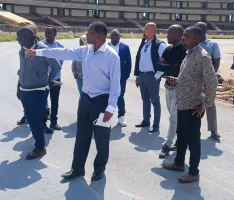
For a country globally celebrated for its athletic dominance — particularly in middle- and long-distance running — the state of Kenya’s sports infrastructure paints a troubling picture.
Iconic venues such as the Moi International Sports Centre (Kasarani) and Nyayo National Stadium have fallen into visible disrepair. Once-proud pitches have reportedly turned brown and uneven, drainage systems have failed, and maintenance has lagged behind international standards.
Confederation of African Football (CAF) inspectors have in recent years flagged both Kasarani and Nyayo as substandard, raising concerns over Kenya’s readiness to host major continental tournaments, including the African Nations Championship (CHAN).
In some instances, national teams have been forced to stage “home” matches outside Kenya due to facilities failing to meet CAF and FIFA requirements — an embarrassing and costly reality for a nation that brands itself as a sporting powerhouse.
Renovations Without Results?
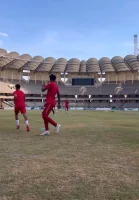
The government has previously announced renovation and modernization efforts at key venues. However, insiders and sports stakeholders question how millions of shillings allegedly allocated for upgrades have yielded facilities that remain partially inoperable.
Sources familiar with ongoing projects claim some works were stalled midstream, while others were poorly executed despite significant financial outlays. Questions are now being raised about procurement processes, contractor selection, supervision standards, and oversight mechanisms within Sports Kenya.
The DCI investigation is expected to focus on:
Tendering and procurement procedures for stadium renovations
Disbursement and utilization of allocated public funds
Project completion timelines versus payments made
Possible conflict of interest and abuse of office
Athletes Pay the Price
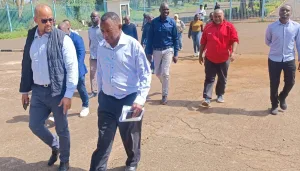
While investigations gather momentum, it is Kenyan athletes who bear the brunt of the crisis.
Several national team players have privately expressed frustration over limited access to training facilities, citing restricted training windows — sometimes as little as two hours — and inadequate equipment.
Outside Nairobi, the situation appears even more dire. Regional arenas, including those in counties such as Turkana, are reportedly waterlogged, uneven, and poorly maintained, effectively denying grassroots athletes the opportunity to train in safe and professional conditions.
Sports analysts argue that infrastructure decay directly undermines talent development pipelines. “You cannot expect world-class results when athletes train in substandard conditions,” said one sports development consultant familiar with facility audits.
Leadership Under the Spotlight
As investigations begin, attention has turned to the agency’s top leadership.
Sports Kenya’s leadership structure includes:
Timothy Kilimo – Director General
Gabriel Komora – Deputy Director General
Mark Lomunokul – Chairman
Board Members: Lech Kaburu, Joseph Mwangi, Waithaka Ng’ang’a, Philip Cheruiyot, Nelson Cheruiyot, Nelson Sifuna
Doreen Odhiambo – Director
The DCI probe will likely examine the role of management and board oversight in ensuring accountability and value for money.
Neither Mr. Kilimo nor Mr. Komora had publicly responded to the allegations at the time of publication. It remains to be seen whether the investigation will uncover systemic failures, individual culpability, or both.
A Broader Governance Question
The unfolding probe raises deeper concerns about governance within state agencies tasked with managing public resources. Sports infrastructure projects typically involve multi-billion-shilling budgets, complex contracts, and multiple layers of oversight — factors that can create fertile ground for inefficiency or corruption if controls are weak.
Transparency advocates are calling for a comprehensive audit of all ongoing and completed sports facility projects over the past decade, alongside reforms in procurement and independent technical supervision.
What’s at Stake
Kenya’s sporting success is more than prestige — it is economic, diplomatic, and cultural capital. International tournaments generate tourism revenue, sponsorship opportunities, and global visibility.
If mismanagement allegations are substantiated, the consequences could extend beyond administrative shake-ups. They could reshape how sports infrastructure is financed, monitored, and maintained in Kenya.
For now, the spotlight remains firmly on Sports Kenya — and on whether the DCI investigation will deliver accountability in a sector where excellence on the track has long masked cracks in the foundations beneath it.