

By Zippy Steve,
Kenya has renewed its commitment to protecting children’s rights, improving their welfare and creating opportunities for their development, with government officials calling for stronger action from families, institutions and development partners.
The call was made during the 2026 World Children’s Day celebrations held at Ndumberi Stadium Grounds in Kiambu County, where hundreds of children, government representatives, parents and civil society organisations gathered to mark the occasion.
Held under the theme, “Prioritizing Children Now, Shaping Our Future,” this year’s celebrations focused on the need to place children at the centre of national development and ensure their rights are protected at every stage of life.
National Council for Children’s Services (NCCS) Chief Executive Officer Abdinoor Mohamed used the occasion to reflect on Kenya’s progress in recognising and protecting children’s rights, tracing the country’s commitment to international and regional child protection agreements.
Mohamed recalled that Kenya ratified the United Nations Convention on the Rights of the Child in 1990, becoming one of the earliest countries to embrace the international agreement.
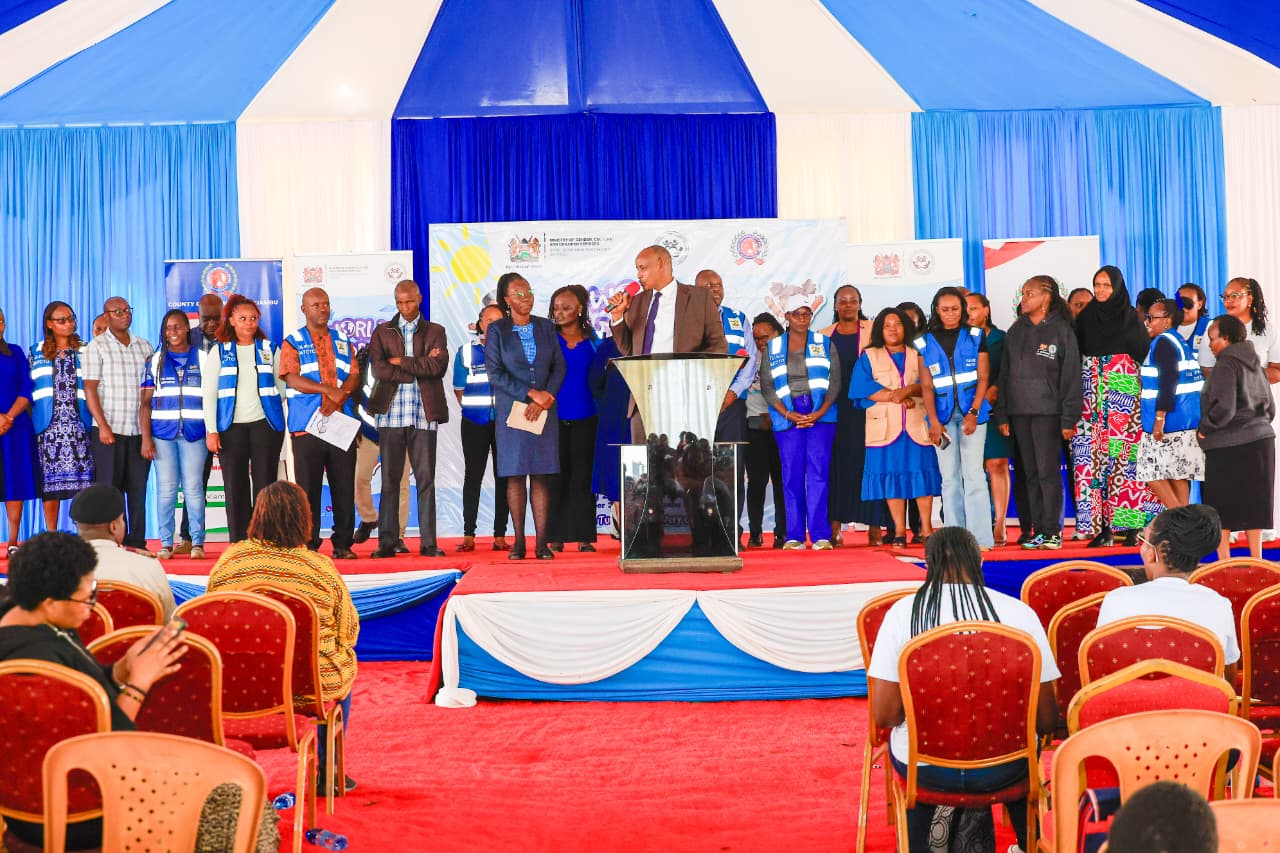
He said the country later adopted the African Charter on the Rights and Welfare of the Child and incorporated children’s rights into the Constitution and the Children Act, Cap 141 of 2022.
According to Mohamed, these legal measures represent important milestones in the country’s efforts to guarantee the welfare and protection of children.
He said this year’s theme should serve as a reminder that children’s rights require immediate attention and should not be treated as an issue for the future.
“Children’s rights cannot wait. A child is not waiting to become someone; a child already is someone, with dreams, ideas and a voice that can change decisions towards the better of their society,” Mohamed underscored.
He described investment in children as one of the most important responsibilities facing the country, adding that both state and non-state actors must take an active role in ensuring children receive the support and protection they deserve.
Cabinet Secretary for Gender, Culture and Children Services Hanna Wendot Cheptumo, through her representative, presided over the event, which also marked 37 years since the adoption of the United Nations Convention on the Rights of the Child.
In her address, the Cabinet Secretary raised concern over the challenges affecting millions of children in Kenya, including poverty, violence and exclusion. She noted that climate change, growing digital threats and economic inequalities were exposing children to additional risks.
She also pointed to declining birth registration figures, warning that children without legal identity documents face difficulties accessing essential services and enjoying their rights.
Principal Secretary for Children Services Caren Ageng’o outlined government efforts to strengthen child protection and improve support for vulnerable families.
She cited the establishment of a dedicated State Department for Children Services in April 2025 as an important step towards improving coordination and implementation of the Children Act, 2022.
The government is also continuing to support vulnerable households through the Cash Transfer for Orphans and Vulnerable Children programme, which currently reaches more than 430,000 households. In March 2026, the programme received more than KSh1.7 billion in disbursements.
Ageng’o further highlighted the National Care Reform Strategy, which seeks to move children away from unnecessary institutional care and ensure they grow up in family-based environments by 2032.
On child protection, she revealed that more than 222,000 cases were handled during the 2025/2026 financial year. Other interventions include the 90-Day Rapid Results Initiative in the Central region and the US$3.8 million ChildSAFE Kenya programme.
Director Betty Kipngetich a representative of the NCCS board emphasised that the Council’s mandate goes beyond coordinating child welfare programmes, noting that it has a responsibility to advocate for the rights of every child in the country.
She outlined five key areas guiding the Council’s work: strengthening child protection systems at national and county levels, preventing violence and exploitation, reducing reliance on institutional care, promoting children’s participation in decisions affecting them and building partnerships that deliver measurable results.
The World Children’s Day celebrations provided an opportunity for the country to assess its progress in protecting young people while confronting the challenges that continue to affect their welfare.
Speakers at the event agreed that the responsibility of raising and protecting children cannot rest with the government alone. Parents, schools, communities and development partners must all play their part in ensuring that every child grows up in a safe environment with access to education, care and opportunities to realise their potential