
Kenya’s 37th Rhino Charge Challenge is set to take place on May 30 in Samburu, backed by a KES 114 million commitment from Safaricom PLC and its philanthropic arm, the M-PESA Foundation, reinforcing a growing blend of technology, sport, and environmental conservation.
The funding will support conservation work under the Rhino Ark Kenya Charitable Trust, alongside logistical and connectivity support for the off-road competition that raises funds for Kenya’s “water towers.”
Of the total package, KES 94 million from the M-PESA Foundation will be directed toward ecosystem restoration and protection projects. These include fencing and safeguarding the Mount Elgon Forest (Suam Block), rehabilitation of the Mau Forest Complex across Narok, Kericho and Bomet counties, and continued conservation work in the Mount Kenya forest landscape in Tharaka Nithi County.
The remaining KES 20 million from Safaricom will support event participation and digital connectivity, with KES 17 million allocated to three entry teams—Car No. 44 led by Adil Khawaja, the EV Explorers team led by Richard Kiplagat, and the all-women Zambarau Heels on the Wheel led by Agnes Mwangi. A further KES 3 million will enhance communication infrastructure during the event.
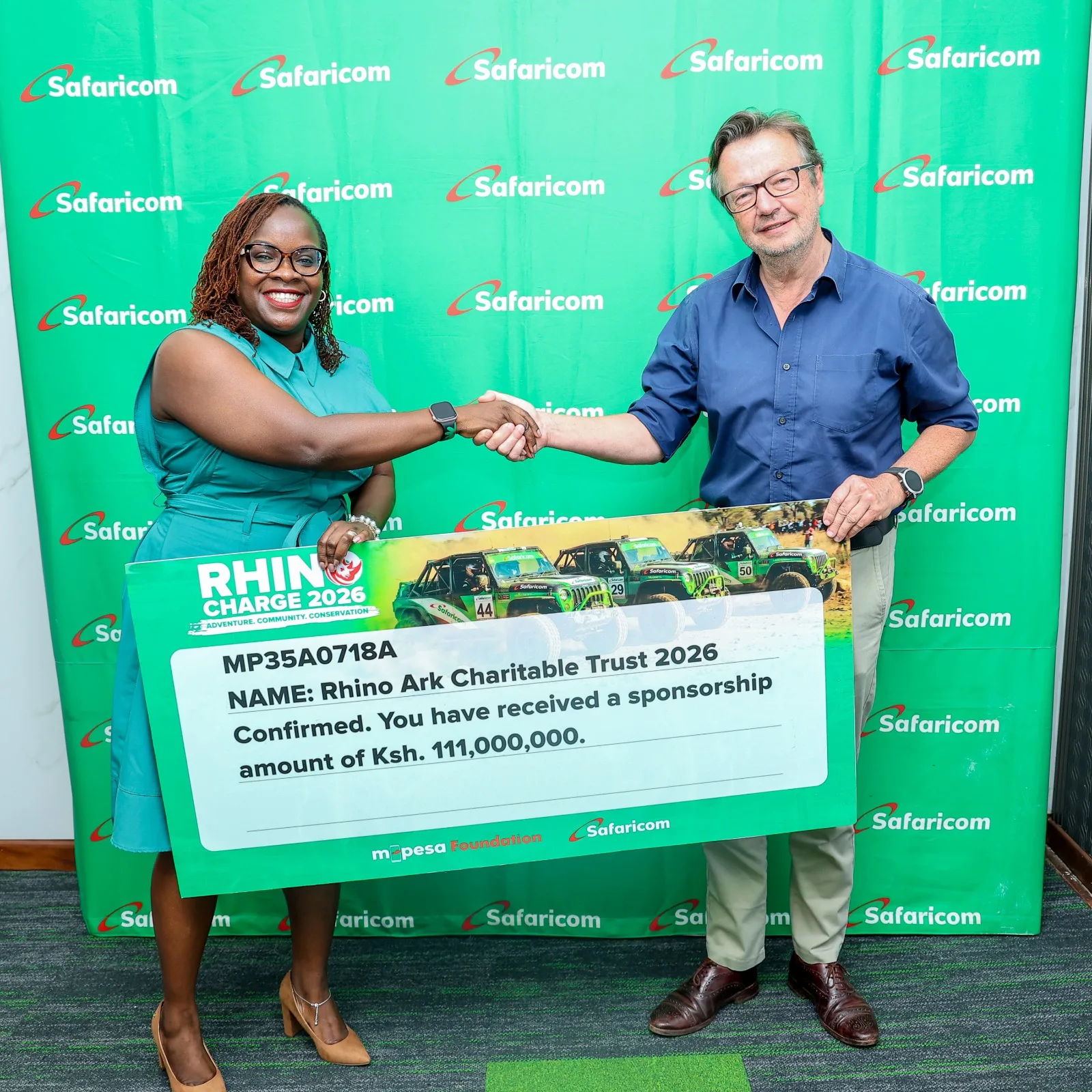
Speaking during the cheque handover at Safaricom Headquarters in Nairobi, CEO Peter Ndegwa framed the investment as part of the company’s long-term sustainability vision:
“This year, we are proud to commit KES 114 million through the M-PESA Foundation and Safaricom. As a company, sustainability remains central to how we create long-term value for our customers, communities, and the environment. Our support for the Rhino Charge reflects our commitment to practical conservation efforts that protect Kenya’s natural heritage while driving innovation and resilience.”
A key highlight of this year’s support is the deployment of enhanced connectivity infrastructure, including 5G services, aimed at improving communication in the remote and rugged Samburu terrain. The upgrade is expected to improve coordination for participants while also enhancing spectator engagement, demonstrating how digital infrastructure can operate in extreme environments.
Team funding will also directly support participation, with Car No. 44 receiving KES 15 million, while both EV Explorers and Zambarau Heels on the Wheel receive KES 1 million each.
The 2026 edition is expected to attract about 55 entries, including returning competitors such as Team Huzi and the Zambarau team. The event continues to evolve as both a competitive motorsport challenge and a major conservation fundraising platform.
Team Zambarau’s Elizabeth Wanjiku welcomed the support, saying:
“As Team Zambarau, we are grateful for Safaricom’s support. This is a huge boost for us as an all-ladies team, and it has always been our wish to have them as our sponsors in this noble cause. Their commitment strengthens our resolve, providing us with the resources and confidence to compete at our best. This support not only empowers our team but also reinforces our shared mission of advancing conservation and protecting Kenya’s natural heritage through the Rhino Ark Kenya Charitable Trust.”
EV Explorers team lead Richard Kiplagat also noted the importance of continued backing:
“As a team, we are truly grateful for Safaricom’s continued support for this event. This is the second year in a row they are backing us, and we deeply appreciate it. As the only EV team in the competition, we are highly motivated not only to complete the challenge but also to emerge among the best…”
Last year’s Rhino Charge in Baringo County raised KES 269.5 million, contributing to ongoing conservation of Kenya’s water catchment areas. Over the years, Safaricom has supported the initiative for more than a decade, helping mobilize over KES 2.6 billion for conservation projects across the country.
According to Rhino Ark, more than 650 kilometres of electric fencing have been constructed to reduce human-wildlife conflict, protecting both ecosystems and over 80,000 households living near forest edges.
Rhino Ark Executive Director Christian Lambrechts said preparations are already underway for this year’s edition, with about 65 entries expected, and praised long-term sponsors for sustaining conservation efforts.
The Rhino Charge remains one of Kenya’s most distinctive events, combining extreme off-road racing with environmental fundraising focused on protecting the country’s critical water towers.